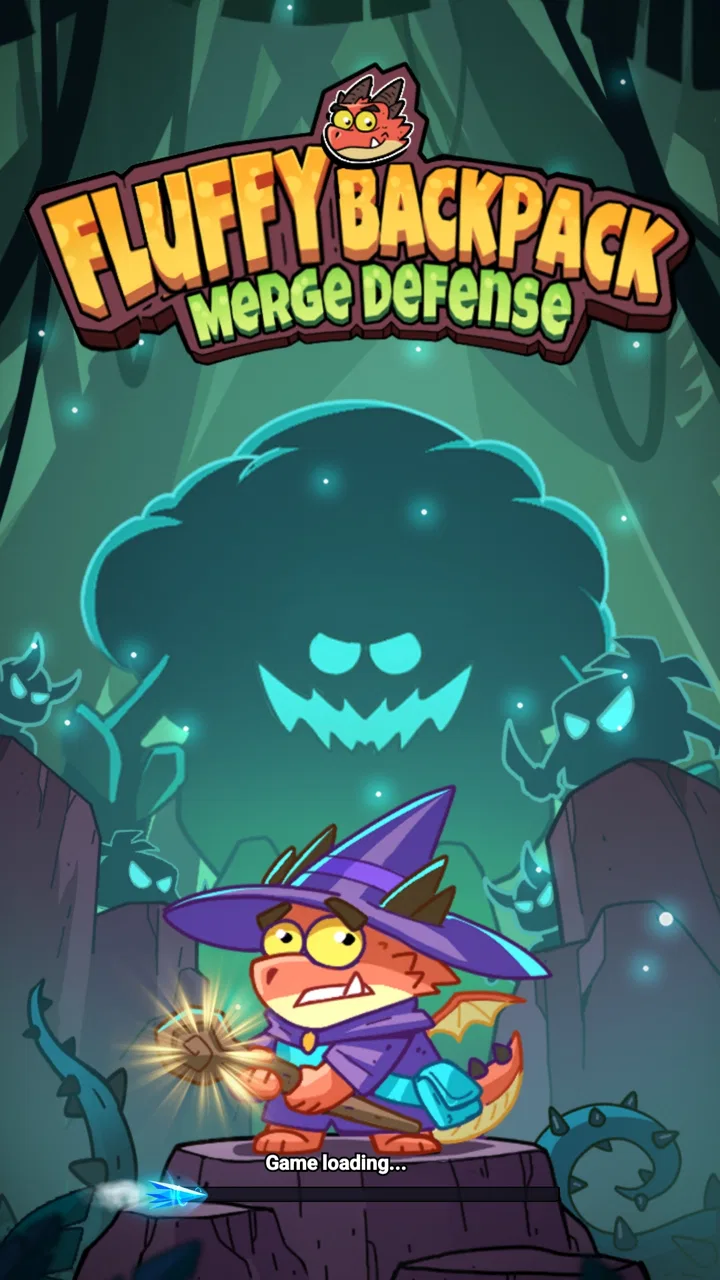
Fluffy Backpack: Merge Defense
- 4.3
- Rating
- 100.00K
- Installs
- Free
- Price

 Analysis by App-foxy
I spent time with Fluffy Backpack: Merge Defense as a mobile strategy game built around a simple question: can I organize a limited bag well enough to survive the next danger? That combination of inventory management, gear merging, and defense gives it a more deliberate feel than a game that only asks me to tap through attacks. I found myself thinking about placement, timing, and whether a seemingly useful item was worth keeping for a later combination.
The game is free to download, with optional in-app purchases ranging from $0.99 to $99.99 per item. It is published by MobGame Pte. Ltd., is rated for Everyone 10+, and runs on Android 8.0 or later. Its current version is 1.0.28, while the game has reached over 100,000 installs and holds a 4.6 average from around 2,100 ratings. Those figures suggest a healthy early audience, although I would still treat the experience as one that may evolve as the developer continues updating it.
How the backpack structure shapes the experience
I like how the backpack turns preparation into the game’s main strategic choice: each item takes up space, and deciding what to combine or keep affects how I approach defense. In the next section, I’ll look at how that structure changes the way I make decisions, especially when a tempting merge competes with keeping useful options available.
You May Also Like

 Blood Strike: 2.5 Anniversary
Blood Strike’s Loadouts Turn Every Drop Into a Tactical Gamble
A close look at Blood Strike’s custom loadouts: how fast access to signature weapons reshapes its battle royale rhythm, rewards preparation, and narrows the gap between fights.

 Pandora - Music & Podcasts
Pandora’s Music Is Easy to Start, but Harder to Recover
Pandora’s strength is its low-effort path from a seed to a station. Its weak spot is how much confidence it asks you to place in connection, setup, and quiet recovery.

 8 Ball Pool
 Is Built on Rivalries, Rematches, and Routine
A close look at the rivalries, rematches, shared routines, and unanswered safety questions that turn a quick pool match into a persistent mobile community.

 Samsung Music
’s Quiet Strength Is Playing What You Already Own
Its reach comes less from spectacle than from dependable access to a personal library. That simplicity is both the app’s strongest retention engine and its ceiling.

 AccuWeather: Weather Radar
AccuWeather Review: A Quick, Clear Forecast for Everyday Decisions
For everyday plans, the best forecast is the one you can understand quickly. AccuWeather makes rain timing, radar, and local conditions easy to act on, with a few trade-offs.

 Hill Climb Racing
Why Hill Climb Racing Still Turns Crashes Into One More Run
A tiny car, a bumpy hill and one more upgrade: Hill Climb Racing keeps resurfacing because its simple chaos makes every near-miss feel personal.
More From Our News Desk
View All News


Readability starts with a small, understandable idea
The strongest part of the design is the central loop. I am not simply choosing a unit from a menu and watching it fight. I am managing a bag, combining equipment, and preparing for defense. That makes every item feel like part of a compact puzzle. The appeal comes from turning a messy collection of gear into something that can actually support the next encounter.
That structure is easier to understand than many strategy games with several currencies, upgrade trees, and separate menus. Even when the game becomes more demanding, the backpack gives the session a clear physical metaphor: space is limited, combinations matter, and poor organization can have consequences. For a new player, that is a useful foundation because the main activity remains visible rather than being hidden behind a long chain of screens.
I also like that the merge idea creates a natural reason to inspect equipment instead of treating every reward as an automatic upgrade. A new item is not always valuable in isolation. Its usefulness may depend on what is already in the bag and whether keeping it blocks a better arrangement. That small trade-off is one of the more interesting parts of the game, and it rewards players who pause before making a quick decision.
Navigation is approachable, but attention still matters
In my experience, the game is easiest to follow when I focus on one task at a time: first understand what is in the bag, then decide what can be merged, and finally prepare for defense. That order reduces mental clutter. Players who rush through rewards or tap without checking the layout may find the experience more confusing than it needs to be.
The visual organization is most helpful when the game keeps the backpack, gear, and defensive goal easy to distinguish. I would recommend taking a moment at the start of each session to identify which area is for arranging items and which area represents the immediate threat. That habit is especially useful for people who do not usually play strategy games, because it turns an apparently busy screen into a short routine.
There is also an important difference between readability and simplicity. The basic concept is simple, but the decisions are not always simple once several pieces of gear compete for space. Someone looking for a completely relaxed idle game may find the inventory planning more demanding than expected. That is not a flaw by itself, but it changes who will enjoy the game.
A practical workflow for clearer decisions
My most useful approach was to avoid merging immediately whenever a combination became available. I first looked at the remaining open space and considered whether the separate pieces might be more flexible for the next defense. Merging can make the bag cleaner, but a cleaner bag is not automatically a stronger bag. Sometimes preserving options is more valuable than creating one improved item too early.
A second helpful habit is to treat the backpack as a preparation board rather than a storage box. I tried to keep related gear close together and leave a small amount of room for incoming items. This reduced the number of rearrangements I needed to make and made it easier to notice which pieces were actually contributing to my plan. It also made the game more comfortable during short sessions, because I spent less time reconstructing the layout after every reward.
These are not complicated tactics, but they are the kind of details that the short store summary cannot explain. The game becomes more satisfying when I use the bag deliberately instead of seeing it as a place where items happen to collect.
Motor and sensory considerations
From a motor perspective, the main challenge is not a fast action sequence but the repeated handling of items and the need to make accurate selections. That may suit players who prefer planning over rapid reactions. It can also be less comfortable for anyone who finds repeated dragging, tapping, or small target selection tiring. I would approach it cautiously if precise touch interaction is difficult, because the backpack loop depends on handling objects rather than only choosing from large, simple buttons.
The game’s strategic pace gives me more time to think than a reflex-heavy defense game would. That is a meaningful advantage for players who need a calmer rhythm or who prefer to process a screen before acting. However, slower decision-making does not remove every access issue. If the layout becomes crowded with gear, the player still has to distinguish pieces and understand where an action will place them.
Visually, the game’s identity is clearly built around a fluffy, friendly presentation rather than a harsh military tone. That can make the experience feel less intimidating for younger players within the Everyone 10+ rating and for adults who prefer lighter themes. Still, a soft visual style does not guarantee that every icon or item distinction will be equally easy to recognize. I would not assume that players with low vision or color-vision differences will find every important distinction effortless.
For sensory-sensitive players, the best fit will depend on how they react to the game’s visual activity and defensive moments. The planning aspect is comparatively controlled, but the game is still designed as a defense title, so it may not feel as quiet as a pure organization puzzle. I appreciated being able to approach it as a series of decisions, yet I would choose a calmer alternative for someone who wants a nearly static, low-stimulation experience.
Situational access: where it works well in daily life
This is a good candidate for short breaks because the core loop can be understood without committing to a long story or a complicated social routine. I could imagine playing it while waiting for an appointment, during a commute with a stable connection, or at home when I wanted something more engaging than a passive puzzle but less demanding than a large role-playing game. The backpack gives each session a clear purpose: arrange, merge, and defend.
A realistic example is a ten-minute evening break. I might open the game, review the items already collected, combine only the pieces that support my current setup, and prepare for the next defense. If I am interrupted, the planning context is easier to recover than in a game that depends entirely on remembering a fast sequence of actions. The important point is to stop at a natural preparation point rather than opening it when I need instant, completely mindless entertainment.
It may also work well for players who enjoy discussing choices with a friend or family member. The bag creates visible decisions that are easy to explain: keep these pieces separate, merge those pieces, or leave room for something more useful. That makes it more approachable as a shared strategy conversation than a game whose best decisions are hidden in complex statistics.
On the other hand, I would skip it for a player who wants a traditional battlefield with direct unit control, elaborate map movement, or a deep campaign narrative. This is strategy through compact inventory decisions, not a substitute for a full-scale tactics game. Someone who finds item organization tedious may also lose interest quickly, because the backpack is not a side activity; it is the center of the experience.
What the free model means for different players
The free entry point makes it easy to test whether the merge-and-defense loop suits you before spending anything. I would recommend playing without buying immediately and paying attention to whether the bag decisions themselves remain enjoyable. If the basic rhythm already feels rewarding, optional purchases may be easier to evaluate as conveniences rather than necessities.
The broad purchase range deserves a thoughtful approach. A low-cost item and a much larger purchase do not represent the same commitment, so I would set a personal limit before browsing any offers. This is particularly important when a game repeatedly presents new gear or progress opportunities. The right question is not whether an item looks useful in the moment, but whether it improves the part of the game you actually enjoy.
For families, the Everyone 10+ rating is a useful starting point, but it should not replace personal judgment. The game’s friendly presentation may appeal to younger players, while the planning and purchase choices still deserve adult attention. I would explain that free access does not mean every optional item is free, especially if a child is using a device with a saved payment method.
Remaining barriers and points of friction
The biggest barrier is the possibility of visual and cognitive crowding. A backpack full of equipment can create several decisions at once, and the player must remember what can be combined while also thinking about defense. I found that the game was more enjoyable when I slowed down, but players who prefer immediate clarity may see that pause as friction.
Another limitation is that the same mechanic that makes the game distinctive can also become repetitive. If arranging and merging items does not feel satisfying on its own, the defensive layer may not be enough to carry the experience. Compared with a standard tower-defense game, this title puts more emphasis on preparation and less on placing defenses across a large battlefield. Compared with a classic merge game, it adds pressure because the organization has a defensive purpose. Neither comparison makes it universally better; it simply serves a different preference.
Touch accuracy may be another practical concern. I would be more comfortable playing on a device where I can clearly see the backpack and interact without rushing. On a smaller screen, crowded item arrangements could require more care, especially for players with limited dexterity or reduced visual precision. The game’s thoughtful pace helps, but it cannot completely remove the need for accurate interaction.
I also think the purchase system can affect the feeling of progress, even for players who never spend money. Seeing optional items can make a free session feel less self-contained if I start comparing my current setup with what might be available elsewhere. My solution was to judge each run by the quality of my decisions rather than by the number of items I had. That mindset keeps the strategy loop at the center.
Who will get the most from this game?
I would recommend Fluffy Backpack: Merge Defense to someone who likes sorting, combining, and making small improvements under pressure. It is especially suitable for players who enjoy strategy but do not want a huge map, a long tutorial, or constant real-time reactions. The game also has a useful middle ground for people moving between genres: it has the satisfying organization of a merge game and the preparation tension of defense.
It is less suitable for anyone seeking a purely accessible-by-default experience with no need for precise touch input, no visual ambiguity, and no purchase-related distractions. I would also point fans of deep competitive strategy toward a more expansive alternative. This game’s decisions are compact and immediate. Its strength is that it can fit into a short mobile session, not that it replaces a full strategy platform.
For players who need a calmer pace, I suggest treating each backpack arrangement as a planning exercise and avoiding rushed merges. For players who become overwhelmed by clutter, keeping a consistent layout and making one change at a time can help. These habits do not alter the game’s design, but they make its central system easier to approach across different abilities and situations.
My inclusive verdict after playing
What I like most is that the game gives strategy a tangible shape. I can see my choices in the backpack, understand why a merge matters, and prepare for defense without learning an enormous rulebook. The gentle presentation helps the game feel approachable, while the limited space gives the decisions enough weight to stay interesting.
What holds it back is that the same compact system can become visually busy and mentally demanding. The experience is not ideal for players who dislike arranging objects, need very large interaction targets, or want a completely passive game. Its free price makes trying it low-risk, but the optional purchases mean I would still play with a clear spending boundary.
Overall, I think this is a worthwhile strategy game for a specific audience rather than a universal recommendation. If you enjoy turning a crowded collection of gear into a deliberate defense plan, I can see the appeal lasting beyond the first few sessions. If you need a large-scale battlefield, rapid action, or the simplest possible touch experience, another genre choice will probably serve you better. The best reason to try it is the backpack decision-making itself: when that small puzzle feels satisfying, the rest of the game has a solid foundation.
FAQs for Fluffy Backpack: Merge Defense
01What is Fluffy Backpack: Merge Defense about?
Fluffy Backpack: Merge Defense is a unique blend of strategy and puzzle gaming where players merge cute, fluffy creatures to create stronger defenses. The game involves strategic placement and merging of these creatures to fend off waves of enemies. As you progress, you unlock new characters and power-ups to enhance your gameplay experience.
02Is Fluffy Backpack: Merge Defense free to play?
Yes, Fluffy Backpack: Merge Defense is free to download and play. However, it offers in-app purchases for players who wish to enhance their gaming experience more quickly or access exclusive content. These purchases are optional and not necessary to enjoy or progress in the game.
03Does Fluffy Backpack: Merge Defense require an internet connection?
Fluffy Backpack: Merge Defense can be played offline, which is great for users who want to enjoy the game without a constant internet connection. However, certain features, like updates or online leaderboards, will require you to be connected to the internet.
04What devices are compatible with Fluffy Backpack: Merge Defense?
Fluffy Backpack: Merge Defense is available for both Android and iOS devices. It is optimized for a wide range of smartphones and tablets, ensuring smooth gameplay. Make sure your device meets the minimum OS requirements specified on the app's download page for optimal performance.
05How does the merging mechanic work in Fluffy Backpack: Merge Defense?
The merging mechanic in Fluffy Backpack: Merge Defense involves combining two identical creatures to form a more powerful unit. This strategic element requires players to think ahead and plan their moves to maximize their defensive capabilities. Successfully merging creatures is key to advancing through the game's increasingly challenging levels.
Pros
- Engaging gameplay with strategic depth.
- Visually appealing graphics and design.
- Regular updates with new levels.
- Intuitive controls for easy navigation.
- Fun merge mechanics add unique twist.
Cons
- In-app purchases can be pricey.
- Occasional ads disrupt gameplay flow.
- Requires constant internet connection.
- Limited tutorial for beginners.
- Some levels feel repetitive over time.

Fluffy Backpack: Merge Defense
Gallery